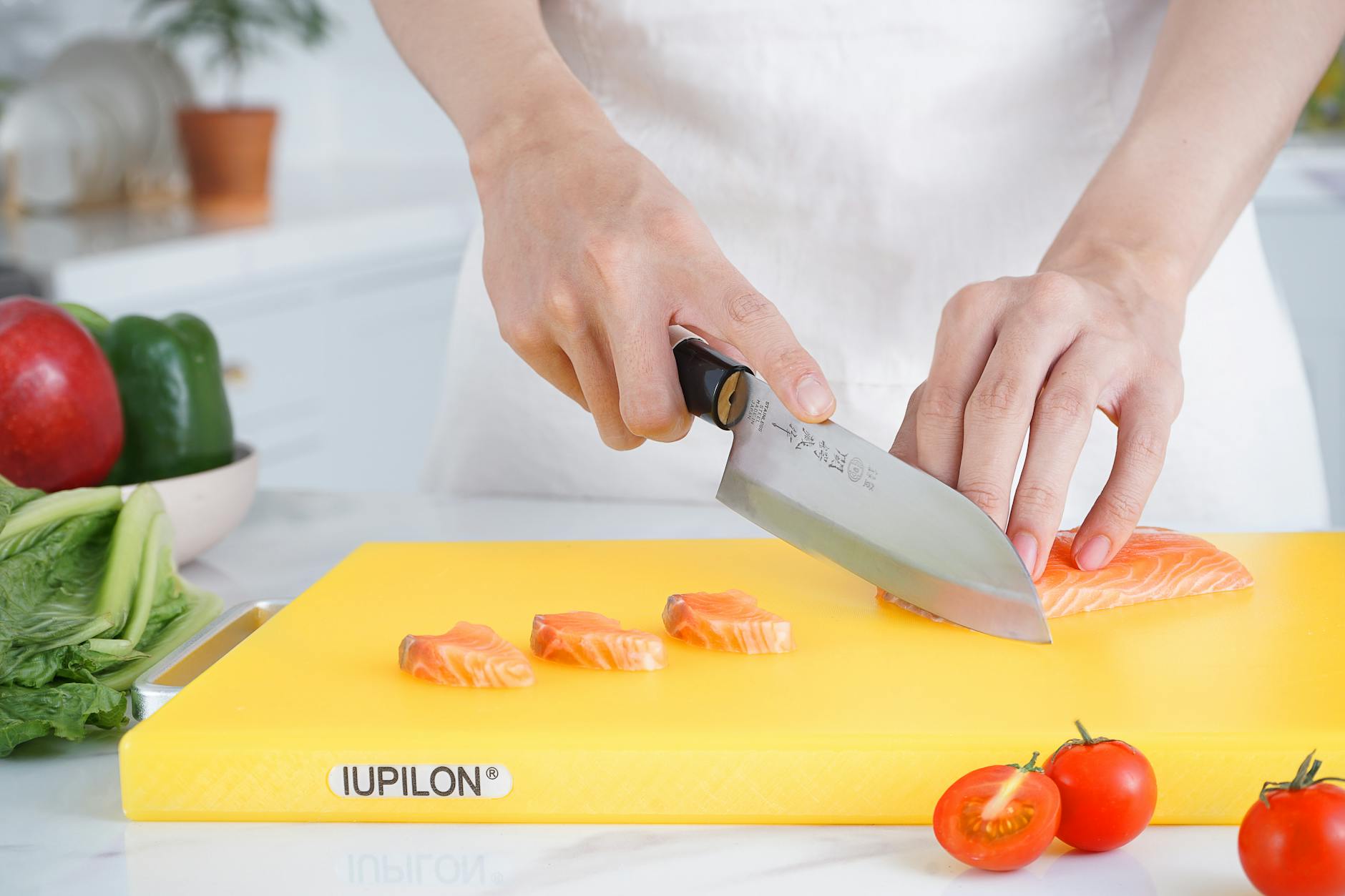
Best Japanese Chef Knife in 2025: 7 Picks From a Japan-Based Knife Obsessive
There’s a moment every serious cook experiences — the first time a truly great Japanese chef knife glides through a ripe tomato without any pressure at all. No sawing. No squishing. Just clean, effortless contact. That moment ruined me for ordinary knives forever, and it’s probably why I’ve spent the better part of five years haunting knife shops from Sakai to Seki, pestering craftsmen with questions and coming home with far too much luggage.
Japanese chef knives have earned their global reputation honestly. The combination of harder steel, thinner grinds, and centuries of bladesmithing tradition produces edges that Western-style knives simply can’t match for precision work. Whether you’re breaking down a whole fish, paper-thin slicing vegetables for a stir-fry, or just upgrading from a department store block set, the right Japanese knife transforms how cooking feels.
The market, though, is genuinely overwhelming — especially from outside Japan. That’s why I’ve put together this guide: practical, experience-backed picks for every budget and skill level.
Quick Picks Summary
| Knife | Best For | Steel | Price (approx.) |
|---|---|---|---|
| Shun Classic 8″ Chef | Best overall for beginners | VG-MAX | ~$185 |
| MAC MTH-80 | Best everyday workhorse | High-carbon stainless | ~$175 |
| Miyabi Birchwood SG2 | Best premium gyuto | SG2/R2 | ~$300 |
| Tojiro DP F-808 | Best budget pick | VG-10 | ~$90 |
| Masamoto VG Gyuto | Best for serious home cooks | VG-10 | ~$220 |
| Yoshihiro Shiroko | Best for enthusiasts (reactive steel) | White #2 carbon | ~$200 |
| Global G-2 | Best for small hands / lightweight preference | CROMOVA 18 | ~$110 |
How We Tested / Our Selection Criteria
Every knife on this list has passed through my own hands — either purchased personally, used extensively in my own kitchen in Osaka, or handled at length during visits to the production regions. My testing criteria prioritize real-world home cook performance over lab metrics.
I evaluated each knife on:
– Out-of-box sharpness (the tomato and paper tests)
– Edge retention over 4–6 weeks of daily home cooking
– Balance and handle comfort during 30+ minute prep sessions
– Ease of sharpening for home users
– Value relative to price
– Availability in the US, UK, and Australia
I also factored in long-term user feedback from cooking communities and the knife shops themselves, where craftsmen are refreshingly candid about what sells and what comes back.
Shun Classic 8″ Chef Knife — Best Overall for Beginners
Shun is a Seki City brand — the same region I visited where I watched craftsmen fold Damascus cladding in a workshop the size of a garage. The Classic line is where most Western cooks should start their Japanese knife journey. It hits the sweet spot of quality, accessibility, and low-maintenance ownership.
The 68-layer Damascus cladding over a VG-MAX core looks stunning, but it’s not just aesthetic. The harder core (about 61 HRC) holds an edge noticeably longer than most Western knives, while the softer outer layers add some lateral durability. The D-shaped Pakkawood handle is comfortable for right-handers (Shun does make left-handed versions), and at 7.9 oz it’s light enough for extended prep without fatigue.
Pros:
– Beautiful Damascus finish that’s actually functional
– VG-MAX steel is rust-resistant and holds an edge well
– Widely available in the US with excellent warranty support
– Comfortable D-handle for most Western hand sizes
Cons:
– D-handle disadvantages left-handed cooks (check for LH versions)
– Not quite as thin behind the edge as pricier gyutos
– Damascus pattern requires careful drying to prevent water spotting
| Spec | Detail |
|---|---|
| Blade Length | 8 inches (203mm) |
| Steel | VG-MAX core, 68-layer Damascus |
| Hardness | ~61 HRC |
| Handle | D-shaped Pakkawood |
| Weight | 7.9 oz |
| Origin | Seki, Japan |
Who it’s best for: Home cooks upgrading from a Western knife block for the first time, or anyone who wants a no-fuss Japanese knife with solid after-sales support.
MAC MTH-80 Professional — Best Everyday Workhorse
MAC knives don’t get the Instagram attention they deserve. They’re not flashy — no Damascus swirls, no exotic handle materials — but professional cooks across the US swear by them, and for good reason. The MTH-80 is what I’d buy if I could only own one knife and needed it to perform reliably every single day.
The dimpled blade (those small hollow-ground ovals above the edge) prevents food from sticking during fast prep work — a genuinely useful feature, not a gimmick. The steel is MAC’s proprietary high-carbon stainless, sitting around 59-61 HRC, which is slightly softer than some competitors but makes the knife significantly easier to sharpen at home on a whetstone.
The handle is a simple Western-style shape that suits cooks who use a pinch grip or a full handle grip equally. It’s not the most exciting knife in the world, but after six weeks of daily use, the edge still bites cleanly into onion skin. That’s the real test.
Pros:
– Dimpled blade genuinely reduces food sticking
– Easier to sharpen than harder Japanese steels
– Comfortable for both pinch and handle grips
– Excellent long-term value
Cons:
– Aesthetically plain compared to Damascus alternatives
– Slightly less edge retention than harder steels (61 HRC range)
– Handle can feel basic to enthusiasts
| Spec | Detail |
|---|---|
| Blade Length | 8 inches (200mm) |
| Steel | High-carbon stainless (MAC proprietary) |
| Hardness | ~59-61 HRC |
| Handle | Western-style composite |
| Weight | 6.5 oz |
| Origin | Seki, Japan |
Who it’s best for: Busy home cooks and working professionals who want reliable, low-drama performance and an easy sharpening experience.
Miyabi Birchwood SG2 — Best Premium Gyuto
Walking into the Miyabi section of a knife shop in Seki felt like entering a different room. The Birchwood line is genuinely one of the most beautiful production knives made anywhere in the world — but beauty isn’t why it earns its place here. The SG2 powdered steel core (also called R2) is exceptional: we’re talking 63 HRC hardness with the kind of edge geometry that makes fine vegetable work feel meditative.
The 100-layer Damascus cladding and the stunning birchwood handle aren’t just marketing. The handle is ergonomically shaped and the balance point sits just forward of the bolster, giving the knife a responsive, lively feel during use. At ~$300, it’s a serious investment, but it’s a knife that will outlast everything else in your kitchen if treated properly.
Pros:
– SG2/R2 steel holds an exceptional edge
– Stunning aesthetics — a genuine heirloom piece
– Excellent balance and ergonomics
– 63 HRC provides remarkable precision cutting
Cons:
– Expensive — a significant investment
– Hard steel requires diamond or fine whetstones to sharpen properly
– Birchwood handle needs careful drying; not dishwasher safe (ever)
| Spec | Detail |
|---|---|
| Blade Length | 8 inches (200mm) |
| Steel | SG2/R2 powdered steel, 100-layer Damascus |
| Hardness | ~63 HRC |
| Handle | Birchwood |
| Weight | 6.7 oz |
| Origin | Seki, Japan |
Who it’s best for: Experienced home cooks ready to invest in a premium, long-term knife — or anyone looking for a meaningful culinary gift.
Tojiro DP F-808 — Best Budget Pick
I’ll be direct: if you’re spending under $100 on a Japanese chef knife, the Tojiro DP is almost certainly the right answer. I first encountered it at a small shop in Tsubame-Sanjo — the Niigata region known for metalworking — where the shopkeeper pulled it out almost apologetically, saying “this one is for people who want the real thing without spending everything.” He was right.
The VG-10 core at 60 HRC performs well above its price point. The edge out of the box is sharp, the triple-riveted handle is comfortable and durable, and the knife has a thin enough grind to feel genuinely Japanese rather than a Western hybrid. It’s not glamorous. The handle is basic. But for a first Japanese knife or a kitchen workhorse, it’s almost unfairly good value.
Pros:
– Exceptional value — VG-10 performance under $100
– 60 HRC holds a good edge for the price
– Simple, durable handle construction
– Thin enough grind to feel authentically Japanese
Cons:
– Basic aesthetics — purely functional
– Handle finish is no-frills
– Not the best choice once you’re ready to upgrade to premium steel
| Spec | Detail |
|---|---|
| Blade Length | 8.2 inches (210mm) |
| Steel | VG-10 core, stainless cladding |
| Hardness | ~60 HRC |
| Handle | Eco-wood composite |
| Weight | 5.9 oz |
| Origin | Tsubame-Sanjo, Niigata, Japan |
Who it’s best for: First-time Japanese knife buyers, students, or anyone wanting to try genuine Japanese performance without a large financial commitment.
Masamoto VG Gyuto — Best for Serious Home Cooks
Masamoto is a Tokyo institution — a brand that’s been supplying professional Japanese kitchens since 1866. The VG line uses VG-10 stainless steel in a more traditional gyuto profile than the Tojiro or Shun: thinner spine, flatter belly, and a distal taper that rewards skilled knife technique. This is a knife that grows with you.
At ~$220, it sits in a competitive range, but the Masamoto’s edge geometry and balance feel noticeably more refined than similarly priced options. The octagonal handle (available in ho wood with a buffalo horn collar) is beautifully simple and sits naturally in a pinch grip. This is the knife I recommend to home cooks who’ve already owned a Japanese knife and are ready to take the next step.
Pros:
– Traditional gyuto geometry rewards skilled technique
– Excellent edge retention and thin grind
– Beautiful, functional octagonal handle
– Masamoto’s professional pedigree
Cons:
– Ho wood handle requires occasional oiling
– Less forgiving than Western-profile knives for beginners
– Harder to find outside specialty retailers
| Spec | Detail |
|---|---|
| Blade Length | 8.2 inches (210mm) |
| Steel | VG-10 stainless |
| Hardness | ~60 HRC |
| Handle | Octagonal ho wood, buffalo horn collar |
| Weight | 5.6 oz |
| Origin | Tokyo, Japan |
Who it’s best for: Intermediate to advanced home cooks who want a traditional gyuto profile and are ready to develop proper knife technique.
Yoshihiro Shiroko (White #2 Carbon) — Best for Enthusiasts
This is the knife I bought on my first visit to Sakai — the city in Osaka Prefecture that produces roughly 90% of Japan’s professional knives. A craftsman at a small forge showed me the difference between stainless and carbon steel by slicing a sheet of printer paper. The carbon knife left a cleaner edge. I bought the Shiroko that afternoon and I’ve been maintaining it ever since.
White #2 (Shirogami) carbon steel is the traditional choice of professional Japanese chefs. It sharpens to a keener edge than any stainless steel, and the sharpness is almost tactile — you can feel the difference. The trade-off is reactivity: this knife will patina, and if left wet, it will rust. That’s not a flaw; it’s a relationship. Owners who maintain their carbon knives properly are rewarded with performance that stainless simply can’t replicate.
Pros:
– Exceptional sharpness — carbon steel’s signature advantage
– Develops a beautiful, protective patina over time
– Sharpens easily and quickly on a whetstone
– Traditional craftsmanship from Sakai
Cons:
– Reactive steel requires immediate drying after use
– Will rust if neglected — not for low-maintenance cooks
– Requires more knife care knowledge than stainless options
| Spec | Detail |
|---|---|
| Blade Length | 8.2 inches (210mm) |
| Steel | White #2 (Shirogami) carbon steel |
| Hardness | ~62-63 HRC |
| Handle | Octagonal magnolia (ho wood) |
| Weight | 5.3 oz |
| Origin | Sakai, Osaka, Japan |
Who it’s best for: Knife enthusiasts willing to invest time in maintenance, and anyone who wants the absolute pinnacle of sharpness from a hand-crafted blade.
Global G-2 — Best for Small Hands / Lightweight Preference
Global is a polarizing brand among knife enthusiasts — purists sometimes dismiss it as “not really Japanese” because of its unconventional all-steel construction. That’s unfair. The G-2 is made in Yoshida Metal Industry’s factory in Niigata, uses CROMOVA 18 stainless steel at 56-58 HRC, and has been a professional kitchen staple for 40 years for legitimate reasons.
The hollow handle filled with sand for balance is genuinely clever engineering, and the knife is exceptionally light at just 5.3 oz. For cooks with smaller hands, or anyone who experiences wrist fatigue with heavier knives, the G-2’s balance and weight distribution are hard to beat. The edge retention is softer than other knives here, but it’s extremely easy to maintain with a honing steel.
Pros:
– Extremely lightweight — ideal for small hands or fatigue issues
– Seamless construction is hygienic (no handle crevices)
– Easy to maintain edge with regular honing
– Widely available everywhere
Cons:
– Lower HRC (56-58) means more frequent sharpening
– All-steel handle can be slippery when wet
– Less edge retention than harder Japanese steels
| Spec | Detail |
|---|---|
| Blade Length | 8 inches (200mm) |
| Steel | CROMOVA 18 stainless |
| Hardness | ~56-58 HRC |
| Handle | Hollow stainless steel |
| Weight | 5.3 oz |
| Origin | Niigata, Japan |
Who it’s best for: Cooks with smaller hands, those prone to wrist fatigue, or anyone who prefers a seamless, hygienic all-steel construction.
Buying Guide: What to Look for in the Best Japanese Chef Knife
Steel Type: Stainless vs. Carbon
Most home cooks should start with stainless steel (VG-10, VG-MAX, SG2). It’s rust-resistant, forgiving, and still dramatically sharper than Western knives. Carbon steel (White #2, Blue #2, Aogami Super) offers superior sharpness and easier sharpening, but demands consistent maintenance. If you’re not prepared to dry your knife immediately after every use, stick with stainless.
Hardness (HRC)
Japanese knives typically run 58–65 HRC, compared to 54–58 HRC for most Western knives. Higher hardness = better edge retention but more brittleness. Knives above 62 HRC should never be used on frozen food or hard bones.
Handle Style: Western vs. Wa
Western (yo) handles are riveted and familiar. Wa handles (octagonal or D-shaped, often in ho wood) are lighter and more traditional — they reward a pinch grip and are preferred by many professional cooks. Beginners often find Western handles more comfortable initially.
Blade Profile
Gyuto knives (the Japanese chef knife equivalent) typically have a flatter belly than Western chef knives, encouraging a push-cut technique rather than a rocking motion. If you’re a habitual rocker, there’s an adjustment period.
Budget Reality
Spend as much as you can reasonably afford on one good knife rather than buying a block set of mediocre ones. A $150–$200 knife maintained properly will outperform a $500 set of poorly maintained knives every time.
FAQ
Q: What’s the difference between a gyuto and a chef knife?
A: A gyuto is a chef knife — it’s the Japanese term for the Western-style all-purpose chef knife. The key differences are the steel (harder in gyutos), the grind (thinner and more acute), and the blade profile (slightly flatter belly). Japanese gyutos are optimized for push-cutting and slicing; Western chef knives favor the rocking motion.
Q: Are Japanese chef knives suitable for beginners?
A: Absolutely — with the right choice. Start with a stainless steel option like the Tojiro DP or Shun Classic. Avoid carbon steel until you’re comfortable with knife maintenance routines. The main adjustment is technique: Japanese knives shouldn’t be used to cut through bones or frozen food.
Q: How often should I sharpen a Japanese chef knife?
A: For regular home use (cooking 4–5 times per week), most Japanese knives need whetstone sharpening every 3–6 months. Between sharpenings, use a honing rod — though note that ceramic or leather strops are better suited to harder Japanese steels than traditional steel honing rods.
Q: Can I put a Japanese chef knife in the dishwasher?
A: Never. The heat, moisture, and detergent will damage the steel, dull the edge, and warp or crack wooden handles. Hand wash with mild soap, dry immediately, and store on a magnetic strip or in a knife block. This applies to every knife on this list without exception.
Q: What’s the best Japanese chef knife under $100?
A: The Tojiro DP F-808 is the clear answer. It uses genuine VG-10 steel at a price point that undercuts most competitors, and its performance-to-cost ratio is almost embarrassingly good. It’s the knife I recommend to everyone who asks me where to start.
Conclusion
The best Japanese chef knife for you depends on where you are in your cooking journey. First-time buyers should look hard at the Tojiro DP (budget) or Shun Classic (step-up). Cooks ready to invest in something exceptional should consider the Miyabi Birchwood SG2 or the Masamoto VG. And if you’re ready to commit to carbon steel maintenance, the Yoshihiro Shiroko will show you what a truly sharp knife feels like — and you won’t be the same cook afterward.
Whatever you choose, buy one great knife instead of a set of mediocre ones, learn to use a whetstone, and keep it out of the dishwasher. Do those three things and you’ll have a kitchen tool that makes every meal more enjoyable to prepare.
The craftsmen I’ve met in Sakai, Seki, and Tsubame-Sanjo put genuine pride into these blades. They deserve to be used well.