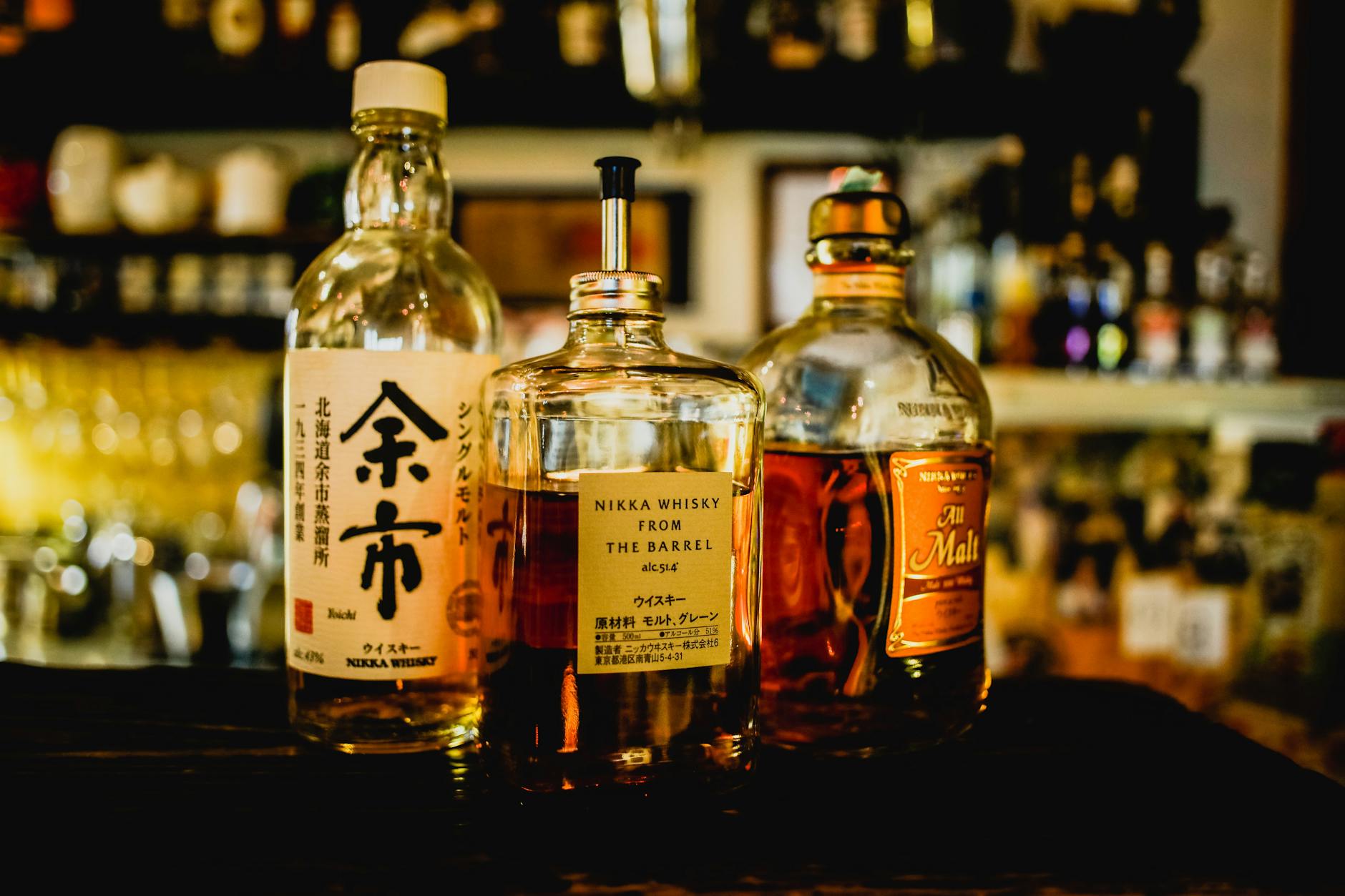
Yamazaki vs Hakushu Whisky Comparison: Japan’s Two Greatest Single Malts
Quick Verdict
Choose Yamazaki if you love rich, fruit-forward whiskies with depth and complexity — think Sherry cask sweetness and dried fruit warmth. Choose Hakushu if you prefer something lighter, fresher, and more herbaceous with a distinctly Japanese forest character. Both are world-class. If you can only buy one first, Yamazaki 12 is the more approachable crowd-pleaser.
There’s a reason the debate between Yamazaki and Hakushu comes up in almost every Japanese whisky conversation. These are the two flagship single malt distilleries from Suntory — Japan’s oldest and most celebrated whisky producer — and they couldn’t taste more different from each other. One sits in a humid valley south of Kyoto, drawing on centuries of sake and shochu tradition. The other is perched deep in the Japanese Alps, surrounded by forest and fed by some of the purest water in the country. Understanding what separates them isn’t just an academic exercise — it directly determines which bottle deserves a place on your shelf.
Quick Comparison Table
| Feature | Yamazaki | Hakushu |
|---|---|---|
| Distillery Location | Shimamoto, Osaka (near Kyoto) | Hokuto, Yamanashi (Japanese Alps) |
| Founded | 1923 | 1973 |
| Style | Rich, fruity, complex | Light, fresh, herbaceous |
| Core Expressions | 12, 18, 25, Distiller’s Reserve | 12, 18, 25, Distiller’s Reserve |
| Cask Types | Mizunara, Sherry, Bourbon, Spanish oak | Bourbon, Sherry, Peated malt |
| ABV (12 Year) | 43% | 43% |
| Price — Distiller’s Reserve | ~$60–75 USD | ~$55–70 USD |
| Price — 12 Year | ~$100–140 USD | ~$90–130 USD |
| Price — 18 Year | ~$300–400 USD | ~$250–350 USD |
| Availability | Difficult (limited globally) | Difficult (limited globally) |
| Best For | Sherry lovers, dessert whisky fans | Scotch/Islay fans, lighter palate drinkers |
| Peated Option? | No | Yes (Distiller’s Reserve has peated malt) |
Yamazaki: Japan’s Most Iconic Whisky
Yamazaki holds a place in whisky history that few distilleries anywhere in the world can match. Founded in 1923 by Shinjiro Torii — the man who built Suntory — it was Japan’s very first malt whisky distillery. The location wasn’t chosen by accident. The confluence of the Katsura, Uji, and Kizu rivers creates a uniquely humid microclimate that accelerates maturation and pulls extraordinary complexity out of the casks. The area has been celebrated for its water quality since the time of Sen no Rikyu, the 16th-century tea master who built a famous teahouse here. That’s not marketing copy — that’s genuine terroir.
I’ve visited the Yamazaki distillery twice, and the tasting room experience is genuinely special. Sitting with a dram of the 18 Year while looking out at the bamboo-lined hillside gives you a real sense of what “place” means in whisky production.
What defines Yamazaki’s character is its cask diversity. The distillery uses an unusually wide range of wood — American white oak, Spanish oak, Sherry butts, and most distinctively, mizunara oak, a rare Japanese hardwood that imparts incense-like, sandalwood, and coconut notes that you simply cannot find anywhere else in the whisky world. The result is a whisky that is unmistakably Japanese but also unmistakably Yamazaki: rich, layered, and deeply satisfying.
Tasting note (Yamazaki 12, neat, from the distillery): Ripe peach, strawberry jam, and a gentle Sherry sweetness on the nose. The palate delivers dried apricot, vanilla, subtle spice, and a whisper of mizunara incense. The finish is warm, medium-long, and slightly honeyed.
Hakushu: The Forest Distillery
Hakushu is Suntory’s younger, wilder sibling — and it wears that identity proudly. Built in 1973 in the Kobushigatake mountain range of Yamanashi Prefecture, it sits at roughly 700 meters above sea level and is surrounded by one of Japan’s most pristine natural forest reserves. The distillery itself is almost hidden within the trees, and when you visit (I made the trip from Tokyo on a crisp October morning), the air genuinely smells different — cool, green, and faintly mossy. That environment isn’t just atmospheric; it shapes the whisky directly.
The water source at Hakushu is snowmelt filtered through granite layers of the Southern Alps — extraordinarily soft and pure. Combined with the cooler fermentation temperatures and the distillery’s use of lightly peated malt in some expressions, Hakushu produces a whisky that feels almost the opposite of Yamazaki in the glass.
Where Yamazaki is warm and enveloping, Hakushu is bright and invigorating. It’s the kind of whisky that works beautifully as a highball — a preparation that Japanese bars take extremely seriously — because the carbonation amplifies its fresh, green, almost minty character without drowning it.
Hakushu also has a quietly adventurous side. The Distiller’s Reserve expression includes peated malt in the blend, giving it a subtle smokiness that you don’t find in Yamazaki. It’s not Islay-level peat by any means, but it adds a fascinating dimension that makes Hakushu particularly appealing to Scotch drinkers crossing over into Japanese whisky.
Tasting note (Hakushu 12, neat, poured at a Shinjuku whisky bar): Fresh green apple, kiwi, and a faint herbal note — almost like fresh mint and basil. The palate is lighter-bodied with gentle smoke, white pepper, and a cool, refreshing finish that lingers cleanly. Remarkably elegant.
Head-to-Head Comparison
Flavor Profile & Taste
This is where the two distilleries diverge most dramatically, and it’s the most important factor for most buyers.
Yamazaki leans into richness. The Sherry and mizunara cask influence is pronounced, especially in the aged expressions, and you get layers of dried fruit, dark chocolate, spice, and that signature incense-like Japanese oak quality. It’s a whisky that rewards slow sipping and contemplation. Neat or with a single large ice cube is how most Japanese whisky enthusiasts drink it.
Hakushu is all about freshness and restraint. The green, herbal, and lightly smoky notes make it feel almost like a different category of spirit. It’s lighter on the palate and more delicate, which some drinkers love and others find underwhelming compared to Yamazaki’s drama. In Japan, Hakushu highballs are genuinely popular in whisky bars precisely because that freshness shines through carbonation.
Winner for richness: Yamazaki
Winner for freshness/versatility: Hakushu
Age Statements & Expressions
Both distilleries offer remarkably parallel lineups, which makes direct comparison easy:
- Distiller’s Reserve (No Age Statement): The entry point for both. Yamazaki DR leans fruity and approachable; Hakushu DR has that light smoke character. Both retail around $55–75 USD and are the most widely available expressions.
- 12 Year: The sweet spot for most buyers. Both are exceptional at this age tier. Expect to pay $100–140 for Yamazaki 12 and slightly less for Hakushu 12 in most markets.
- 18 Year: Where things get serious — and expensive. Both expressions are stunning, with Yamazaki 18 often cited as one of the greatest whiskies in the world. Prices have surged significantly due to global demand.
- 25 Year: Ultra-premium, ultra-rare, and priced accordingly (often $1,000+ at retail when you can find it). Collector territory.
One important note: both 12 and 18 Year expressions are genuinely difficult to find at retail. I’ve seen them appear and disappear within hours at specialty shops in Tokyo’s Ginza district. The Distiller’s Reserve expressions are your most reliable entry point.
Distillery & Production
The production philosophy at both distilleries reflects Suntory’s broader approach: create maximum flavor diversity within a single distillery so that the blenders have a huge palette to work with.
Both use multiple pot still shapes (producing spirits of varying heaviness), multiple yeast strains, and varying fermentation times. Yamazaki’s advantage is its cask diversity — particularly the mizunara oak program, which takes decades to develop. Hakushu’s advantage is its environment: the cool mountain air slows maturation slightly and preserves delicate floral and herbal compounds that would evaporate in a warmer climate.
Neither distillery releases detailed production specs publicly (very Japanese), but visits to both give you a genuine appreciation for the craft and intentionality behind every expression.
Price & Value
Honestly, neither represents “value” in the traditional sense anymore. Global demand for Japanese whisky has exploded since the mid-2010s, and secondary market prices for both distilleries are eye-watering.
In Japan, you can still find Distiller’s Reserve expressions at reasonable prices (around ¥5,000–7,000 / ~$35–50 USD) at department stores and specialist shops. The 12 Year expressions hover around ¥10,000–15,000 (~$70–100 USD) when available — significantly cheaper than Western retail. If you’re visiting Japan, buying at the distillery gift shop or at a Isetan or Takashimaya liquor department is your best bet.
Outside Japan, prices are inflated. Budget $100–140 for the 12 Year and accept that you’ll often pay more on the secondary market.
Between the two, Hakushu tends to be marginally cheaper across all tiers, which reflects slightly lower global demand (Yamazaki has more name recognition internationally). That gap is a legitimate value argument for Hakushu.
Which to Buy First
If you’re new to Japanese whisky, start with Yamazaki Distiller’s Reserve or Yamazaki 12. The flavor profile is more immediately accessible and rewarding for most palates, and it clearly communicates what makes Japanese single malt special.
If you already drink Scotch — particularly lighter Highland or Speyside expressions — Hakushu may actually be the more exciting discovery because it offers something genuinely different from what you already know.
Which Should You Choose?
Buy Yamazaki if you:
– Love rich, fruit-forward, Sherry-influenced whiskies
– Enjoy Speyside Scotches like Glenfarclas, Macallan, or GlenDronach
– Want a whisky that impresses guests immediately
– Are buying as a gift for someone who appreciates complexity
– Want to experience mizunara oak — a uniquely Japanese flavor you cannot find elsewhere
Buy Hakushu if you:
– Prefer lighter, more delicate whiskies
– Already drink Scotch and want something distinctly different
– Enjoy highballs and lighter cocktail applications
– Are drawn to herbal, green, and lightly smoky flavor profiles
– Appreciate Islay or lighter Highland Scotch styles
Buy both if:
– You’re building a Japanese whisky collection
– You want to understand the full range of what Suntory’s terroir-driven approach can produce
– You’re hosting a tasting and want to show the contrast between Japan’s two most important distillery styles
The honest truth? These two whiskies aren’t really competitors — they’re complements. Yamazaki for a cold winter evening by the fire; Hakushu for a summer afternoon highball on a Tokyo rooftop. The best Japanese whisky collections have room for both.
Check Price on Amazon
Check Price on Amazon
Check Price on Amazon
Check Price on Amazon
Frequently Asked Questions
Q: Is Yamazaki or Hakushu harder to find?
Both are genuinely difficult to find at retail, especially the age-stated expressions. Yamazaki tends to be slightly harder to source internationally due to its higher global profile and name recognition. In Japan, both appear sporadically at department stores and specialist shops — I’d recommend checking Isetan Shinjuku’s liquor floor or Yamaya stores if you’re visiting Tokyo. The Distiller’s Reserve expressions for both are your most reliable option.
Q: Can I visit both distilleries?
Yes, and both are worth the trip. Yamazaki is easily accessible from Kyoto or Osaka (about 15 minutes by train from Kyoto Station to Yamazaki Station). Hakushu requires more planning — it’s about 2.5 hours from Tokyo by train to Kobuchizawa Station, then a taxi. Both offer guided tours and tasting experiences that book out weeks in advance. Reserve online through Suntory’s official website well before your trip.
Q: Which is better for making a Japanese highball (whisky soda)?
Hakushu, without question. Its lighter body, fresh green character, and subtle smokiness translate beautifully into a highball. That said, Yamazaki Distiller’s Reserve also makes an excellent highball if you prefer a slightly richer, fruitier version. Japanese bars typically use Hakushu for highballs when they want to showcase the style at its most refreshing.
Q: Are there any good alternatives if I can’t find either?
If Yamazaki is unavailable, look at Nikka Yoichi for a similarly rich, complex Japanese single malt. For a Hakushu alternative, Nikka Miyagikyo offers a comparably light and elegant style. Both Nikka expressions are often easier to find and represent exceptional value in the Japanese whisky category.
Prices and availability current as of 2024. Japanese whisky market conditions change rapidly — always check current retail pricing before purchasing.